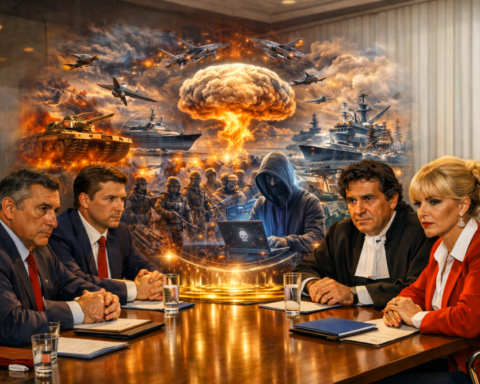
Modern crisis management is evolving within a context in which emergencies are characterised by interdependence, cross-border dynamics and a structural reliance on complex global systems. Crisis phenomena no longer manifest as linear or isolated events, but arise from an interplay of geopolitical tensions, technological disruptions, digital vulnerabilities and fragile logistical ecosystems. This interconnectedness creates a permanent state of exposure, in which organisations face a constant risk of escalation as soon as one component within the system fails. Moreover, the effectiveness of crisis management is increasingly constrained by fragmented governance structures, diverse legal frameworks and outdated operational guidelines that no longer align with the hybrid threat landscape of the current era. This creates a structural discrepancy between the pace at which risks evolve and the capacity of organisations to anticipate, respond and recover effectively. As a result, risks of strategic misallocation of resources, fragmented decision-making and substantial legal and financial consequences become more pronounced.
Crises additionally function as catalysts that expose deep-rooted governance and compliance issues. Under conditions of time pressure, limited information and rising societal expectations, the ability to make consistent, legally defensible and transparent decisions is severely tested. Deficiencies in role clarity, incomplete internal control structures and inadequate information flows lead to significant risks of escalation, reputational harm and potential non-compliance with privacy, cybersecurity and continuity regulations. As stakeholders – from regulators to investors – increasingly expect a high degree of crisis readiness, the absence of robust governance architectures becomes a direct threat to organisational legitimacy and continuity. Within this context, a detailed analysis of critical risk domains is essential to identify legal vulnerabilities, reinforce governance structures and embed operational resilience within strategic decision-making processes.
Global Crisis Synchronisation: Risks of Disruption in Geopolitical and Digital Ecosystems
Global crisis synchronisation refers to the growing likelihood that disruptions occur simultaneously across sectors, infrastructures and jurisdictions, causing traditional response mechanisms to fall structurally short. The interdependence of value chains, digital platforms and financial systems increases the risk that a local incident escalates into a system-wide crisis with global implications. Organisations are confronted with parallel threats that reinforce one another, as geopolitical instability, cyberattacks and failures in critical logistics networks can unfold rapidly. This interconnected environment necessitates deep integration of physical, digital and geopolitical risk frameworks, shifting the strategic focus from reactive intervention to structural anticipation underpinned by robust international governance and compliance structures.
This dynamic gives rise to significant legal and contractual risks, as cross-border operations are subject to a patchwork of regulations, supervisory regimes and liability standards. The obligation to harmonise cross-border continuity planning with various legal frameworks results in complex contract renegotiations involving liability allocation, data protection requirements, cybersecurity obligations and compliance with international standards. Insufficient preparation may result in regulatory enforcement actions, penalties or civil litigation arising from non-compliance. At the same time, governance responsibility is intensified as organisations are required to ensure consistency between regional and central crisis structures, while international regulators increasingly demand transparency, uniformity and legal defensibility.
The intensification of global interdependencies requires sustained investment in predictive models, early-warning systems and adaptive monitoring architectures capable of identifying risks at an early stage and supporting timely interventions. Strategic decision-making must increasingly rely on multidisciplinary analyses encompassing economic, legal, technological and geopolitical dimensions. As a result, proactive resilience capabilities are no longer optional, but constitute an integral element of legally robust corporate management. Simultaneously, leadership faces heightened demands for consistency, documentation and evidentiary justification of crisis decisions and risk assessments within an international compliance environment.
Outdated BCM Structures: Pressure from Hybrid Threats and the Need for Modernisation
Business continuity management (BCM) in many organisations remains dependent on legacy models developed for a period in which threats were largely linear, predictable and sector-specific. Today’s organisations face hybrid threats – ranging from cyberattacks to climate-related disruptions – that emerge simultaneously and reinforce one another. Legacy BCM frameworks do not adequately address these multidimensional risks, leaving continuity plans outdated and insufficient in capturing actual vulnerabilities. This results in material deficiencies in preparedness, crisis response and operational resilience. Given increasing pressure from supervisory regimes and international standards, modernisation of BCM structures has become both a legal and strategic imperative.
A central element of modernisation is the integration of supply chain, data and technology components. Organisations are expected to maintain full end-to-end visibility over their value chains, including dependencies on suppliers, digital platforms and external data services. This integration increases documentation and assurance requirements, as regulators and auditors demand comprehensive evidence of the effectiveness of continuity strategies. Contractual risks also arise when continuity guarantees or risk allocations embedded in outdated agreements fail to align with contemporary threat profiles or legal obligations. In such cases, organisations face exposure to claims, sanctions or reputational damage when crisis responses prove inadequate.
Modern BCM further necessitates a shift towards iterative, real-time and adaptive risk assessments capable of responding immediately to changing circumstances. Reliance on suppliers and chain partners increases vulnerability when integration into BCM strategies is insufficient. Insurers also apply more stringent criteria for continuity risk coverage, which may result in higher premiums or denial of coverage for organisations relying on legacy structures. This creates a direct financial incentive to redesign and modernise BCM architectures. Such modernisation not only enhances operational resilience but also strengthens the legal defensibility of continuity strategies within an increasingly complex and rapidly evolving risk environment.
Real-Time Data as a Key Element in Crisis Management: Speed, Accuracy and Accountability
The use of real-time data in crisis management is a critical determinant of timely detection, classification and escalation of threats. In an environment where incidents can escalate within minutes into systemic disruptions, immediate access to accurate and complete information is essential for legally defensible decision-making. A lack of current data inevitably results in delayed interventions, incomplete analyses and strategic misallocation of resources. This increases the likelihood of damaging operational disruptions while exposing organisations to reputational and compliance risks when decisions fail to meet data protection, information security or governance obligations.
Dependence on external data service providers introduces additional contractual and legal risks. When intelligence or data providers fail to deliver timely or accurate information, organisations may suffer substantial harm while contractual liability on the supplier’s side may be limited. This necessitates carefully drafted service level agreements, exit arrangements and audit mechanisms that safeguard continuity of critical data flows. Simultaneously, governance frameworks require that data-driven decision-making remain fully compliant with privacy legislation and data minimisation principles. Non-compliance may trigger regulatory actions or penalties, particularly when shortcomings emerge in crises with public or societal implications.
To detect emerging threats, organisations increasingly incorporate AI-driven predictive models into crisis governance structures. These technologies support pattern recognition, anomaly detection and proactive intervention. Regulators expect organisations to possess digital competencies aligned with contemporary risk profiles, resulting in elevated expectations for monitoring infrastructures and governance controls. When such systems are incomplete, unreliable or insufficiently secure, operational disruptions may escalate into legal and reputational consequences. Real-time data analysis has therefore become a strategic foundation of crisis management and a core governance responsibility of senior leadership.
Governance Responsibility for Role Clarity: A Key Factor in Effective Crisis Management
Role clarity within crisis structures is a fundamental requirement for effective and legally defensible crisis response. Formal documentation of mandates, decision rights and escalation pathways is essential to accelerate decision-making and prevent delays or miscommunication arising from overlapping responsibilities or governance gaps. When multiple crisis teams operate concurrently – for example across local, regional and international levels – significant organisational complexity may arise, leading to inconsistencies or contradictory instructions. Such fragmentation increases the risk of erroneous decisions and heightens liability exposure, particularly in cross-border contexts where diverse legal regimes apply. A robust governance architecture must therefore clearly and unambiguously define who is authorised to make decisions, under what circumstances and within what mandate.
Beyond internal governance structures, relationships with external stakeholders – including regulators, authorities and chain partners – play a critical role. The complexity of arrangements relating to information exchange, coordination and allocation of responsibilities necessitates precise contractual and legal embedding. Inadequate clarity may lead to non-compliance, liability claims or operational paralysis. During crises, external stakeholders expect full transparency, consistent communication and demonstrable adherence to formal obligations. This reinforces the necessity for clearly defined governance mechanisms, including evidence that role allocation, decision-making models and escalation processes have been tested, communicated and operationally secured.
Board oversight is central to this responsibility. Directors are expected to monitor the effectiveness of crisis structures, assess the legal defensibility of mandates and ensure integrity within decision-making processes. Post-crisis evaluations often reveal structural weaknesses within governance, where shortcomings may result in reputational damage, regulatory intervention or potential liability. A transparent, tested and adaptive governance architecture is therefore essential to safeguard organisational continuity and legitimacy. This requirement intensifies in an environment where stakeholders increasingly expect rigorous accountability, comprehensive documentation and the capacity to make legally sound decisions under pressure.
Cyber Threats as a Core Risk to Business Continuity: Mandatory Integration into Crisis Strategies
Cyber threats represent one of the most intensive and rapidly evolving risks to business continuity, driven by geopolitical tensions, the digitalisation of critical infrastructures and the increasing professionalisation of cybercriminal networks. Cyberattacks have the potential to paralyse operations, obstruct access to critical systems and compromise sensitive data. The impact of ransomware, supply-chain breaches and advanced persistent threats demonstrates how quickly digital disruptions can escalate into severe corporate crises with legal, operational and reputational ramifications. This creates a mandatory requirement for full integration of cyber risks into continuity strategies, risk management processes and crisis response frameworks.
The tightening of NIS2 obligations and sector-specific cybersecurity standards imposes a heightened duty of care on organisations, necessitating stricter measures to ensure compliance. These measures include mandatory IT segmentation, implementation of redundant and fail-safe architectures, and comprehensive documentation of security controls and incident response procedures. Contractual risks arise when cybersecurity obligations are breached or when service level agreements fail to provide adequate protection against digital disruptions. In such cases, organisations may face claims from chain partners, regulators or customers, particularly where data loss, system outages or non-compliance cause material damage.
Reputational risk also plays a decisive role in cyber crisis management. Incidents such as data breaches or prolonged IT outages can swiftly erode trust among customers, investors and regulators. Effective digital resilience requires structural investment in threat intelligence, incident response capabilities and integrated detection-and-response platforms. Organisational readiness must be reinforced through regular cyber exercises, governance assessments and adaptation of crisis architectures to reflect the evolving threat landscape. Legal liability may be substantial where organisations fail to implement adequate protective measures, underscoring the centrality of cybersecurity as a foundational pillar of crisis resilience and business continuity.
Exercise Programmes as a Mandatory Board Responsibility: Crisis Capability and Governance Testing
Crisis exercises have evolved into a structurally mandated instrument within the governance architecture of organisations, as regulators impose increasingly stringent standards for demonstrable crisis competence and preparedness. Implementing systematic and periodic exercise programmes is no longer merely an operational choice but a legal and strategic requirement for safeguarding continuity. Organisations are expected to develop scenarios ranging from cyber incidents and logistical disruptions to complex hybrid scenarios in which multiple threats occur simultaneously. These exercises serve as a crucial mechanism for testing the effectiveness of internal decision-making, mandates and escalation mechanisms. Realistic simulations enable board members and crisis teams to operate under pressure, revealing structural vulnerabilities in governance processes, information flows and command structures. In this context, the absence of demonstrable exercise frequency not only increases operational risks but may also result in regulatory interventions or financial sanctions in cases of non-compliance with supervisory requirements.
Beyond internal capacity building, crisis exercises play an essential role in identifying governance gaps and organisational blind spots. In a legally complex environment where responsibilities are often distributed across multiple regions, entities or value chain partners, ambiguity regarding authority or communication lines may result in significant delays or erroneous decisions. Simulations expose these shortcomings before they materialise during an actual crisis. This creates opportunities to correct mandates, update policy documentation and strengthen internal controls. It also clarifies the extent to which existing compliance instruments are sufficiently robust to withstand acute crises. Regulators increasingly require detailed documentation of exercise outcomes, including the manner in which identified shortcomings have been structurally addressed within governance and risk-management frameworks.
The integration of external parties – including critical suppliers, public authorities and chain partners – likewise plays a substantial role in modern crisis management. Contractual obligations in many sectors require suppliers to participate in joint simulations, particularly when they have a direct impact on operational continuity or compliance obligations. Such collaboration tests whether information exchange, decision-making processes and operational dependencies remain effective under pressure. These joint exercises contribute to synchronisation between central, regional and local teams, enabling faster, more consistent and legally sound decision-making during crises. For board members, demonstrable participation in such programmes is a key indicator of governance quality, while documenting outcomes within audit and assurance processes strengthens both internal legitimacy and external accountability towards regulators and investors.
Crisis Communication as a Core Component of Reputation Management: Strategies for Timely and Effective Response
Crisis communication constitutes an essential dimension within the broader crisis-management framework, as reputational risks develop at unprecedented speed in the digital age. Incidents are disseminated within minutes through social platforms, significantly reducing traditional control over the narrative. This dynamic requires organisations to maintain legally vetted, structured and immediately deployable communication protocols. Clear spokesperson structures, formal communication channels and predetermined escalation criteria are necessary to ensure quick and consistent responses. A lack of coherence or timeliness leads directly to reputational damage and increases the likelihood that regulators or stakeholders question the reliability and integrity of internal processes. In an environment where transparency and credibility are central values, an inadequate crisis narrative poses a serious threat to an organisation’s position in the market and its standing with supervisory authorities.
The legal dimension of crisis communication is far more substantial than often assumed. Incorrect, misleading or incomplete communication may result in liability claims, disputes with contractual partners, administrative sanctions or enhanced regulatory scrutiny. In addition, there is an increasing obligation to notify regulators promptly of incidents that may impact compliance status, financial stability or continuity. This necessitates the integration of communication protocols within broader governance structures and incident-response processes. Consistency between internal decision-making, legal assessment and external communication is essential to avoid discrepancies that may trigger investigations or escalation by supervisory bodies. Real-time monitoring of public sentiment serves as a crucial supplement to these strategies, enabling early detection of signals indicating reputation erosion or misinterpretation of facts.
Crisis communication also requires visible and convincing leadership when incidents affect core operations or the societal responsibilities of an organisation. Stakeholders – including customers, partners, regulators and investors – expect leaders to assume responsibility, communicate transparently and provide insight into mitigating measures. Mandatory digital crisis and media training for responsible executives has become an integral component of modern governance structures. Such training enhances the ability to deliver legally defensible and strategically consistent messaging under pressure. When communication and incident response are fully integrated, they form a robust foundation for preserving reputation and operational legitimacy, even under extreme pressure.
Resilient Supply Chains: Strategic Management of Critical Suppliers and Risks
The rising vulnerability of global value chains has transformed supply chain resilience into a strategic cornerstone of crisis management and governance. Disruptions in logistics networks, geopolitical tensions and dependence on a limited number of suppliers increase the likelihood of severe interruptions in operations and service delivery. As a result, organisations face an obligation to diversify suppliers and critical inputs, as well as to strengthen monitoring mechanisms providing continuous insight into the performance, reliability and compliance of value chain partners. Full transparency across the chain is essential because incomplete or unreliable information directly generates operational vulnerabilities and legal risks. Integrating resilience criteria into procurement strategies and vendor-selection processes is therefore a fundamental step in establishing robust supply-chain governance.
Contractual revisions play a central role in this domain. Organisations are increasingly required to critically assess and, where necessary, restructure existing delivery models to ensure supply security, risk allocation and legally sustainable buffer mechanisms. This includes provisions on redundancy, alternative sourcing, performance guarantees and compliance obligations. Geopolitical or climate-related disruptions may also carry legal implications when suppliers fail to meet agreed standards or when contracts lack adequate exclusions, liability limitations or escalation mechanisms. Regulators impose higher expectations for value-chain transparency, and non-compliance may result in sanctions or increased supervision, with significant reputational and financial impact.
Real-time supply-chain intelligence is an essential instrument for identifying early warning signs of disruptions and initiating mitigation measures. Scenario planning is increasingly mandated to prepare organisations for a wide range of interruptions, from shortages of raw materials and transport restrictions to digital disruptions and geopolitical escalation. Without such planning, critical nodes in the chain may fail, directly threatening organisational continuity. Reputational damage may likewise arise when customers or stakeholders experience prolonged disruptions that could have been prevented through adequate risk management. In this context, supply-chain resilience constitutes a crucial pillar of strategic stability and both legal and operational sustainability.
Public-Private Response Networks: Strengthening Crisis Management and Multistakeholder Collaboration
The growing complexity of crisis situations has driven a structural shift toward public-private collaboration as a foundation for effective response mechanisms. Governments increasingly impose obligations on private organisations, particularly in critical sectors such as energy, healthcare, finance, transport and digital infrastructure. These obligations include formal agreements on role allocation, data sharing, operational response and liability. The rationale behind this development is that public and private actors collectively possess complementary capabilities necessary to limit societal and economic damage. As a result, a governance environment has emerged in which collaboration is not merely desirable but increasingly mandated by legislation, sectoral standards and regulatory expectations.
The legal and operational complexity of public-private response networks requires precise contractual anchoring. This includes agreements on access to critical infrastructure, confidentiality, cybersecurity requirements, information provision and escalation procedures. Insufficiently defined agreements can lead to non-compliance, unclear responsibilities or operational obstacles during crises. At the same time, supervision of such collaborations is intensifying, especially where coordination failures lead to operational harm or societal disruption. Organisations must ensure that cooperation agreements comply with legal standards and that internal processes align with the obligations arising from public partnerships. Failure to do so may result in severe reputational risks, contractual disputes and regulatory intervention.
Beyond legal obligations, effective public-private cooperation offers considerable strategic benefits. Shared information and response structures increase the speed and quality of decision-making, while joint infrastructure and crisis mechanisms enhance operational resilience. Joint crisis exercises and simulations strengthen both public and private capabilities and improve insight into mutual dependencies. However, the political sensitivity of public intervention in private operations requires careful management. Transparency, role clarity and well-defined governance arrangements are essential to maintaining stakeholder trust. Within this context, the private sector is becoming an integral component of national and international resilience agendas, and public-private collaboration has become a structural element of modern crisis-governance models.
Resilience as a Governance Benchmark: From Compliance to Strategic Capital and Long-Term Value
Resilience has evolved from an operational prerequisite into a governance benchmark that directly influences strategic value, governance quality and market positioning. Regulators, investors and credit-rating agencies demand increasing levels of transparency, measurability and integration of resilience within business models. As a result, organisations are obligated to embed resilience explicitly within governance frameworks, audit programmes and risk-management mechanisms. This includes formal reporting requirements, stress testing, scenario analyses and structural evaluation of organisational resilience. Growing dependence on complex digital, logistical and geopolitical ecosystems further requires that resilience be treated as a multidimensional concept encompassing financial, technological, operational and social aspects.
Contractual relationships are increasingly shaped by resilience requirements. Suppliers, partners and customers demand assurances regarding continuity, redundancy and response capabilities. Consequently, resilience clauses, performance indicators and explicit risk-allocation mechanisms are becoming standard features in commercial agreements. Within governance structures, there is a corresponding obligation to oversee compliance with such provisions and to ensure that internal measures meet the contractually agreed standards. Failure to invest adequately in resilience may lead to heightened financial vulnerability, increased insurance premiums or denial of coverage, as well as a loss of confidence among investors and other stakeholders.
Resilience is also a strategic value driver influencing reputation, brand positioning and long-term organisational growth. Organisations with robust redundancy architectures, adaptive capabilities and consistent crisis structures are perceived as more stable, reliable and capable of managing volatility. As such, resilience can directly contribute to competitive advantage and investment attractiveness. Board members bear explicit responsibility for overseeing the continuous development of resilience capacities and ensuring their dynamic alignment with evolving risks and supervisory expectations. In an era in which crises are both inevitable and often unpredictable, resilience constitutes a strategic corporate asset that underpins sustainable value creation and legal legitimacy.